TL;DR
Homeowners regularly maintain their homes, but most do not track what was done or when. A home maintenance history solves this by creating a clear, organized record that protects long-term value and reduces stress.
Most homeowners would never buy a used car without seeing a Carfax.
But when it comes to their home, one of the biggest investments they will ever make, there is usually no clear history at all.
Maintenance gets done. Repairs happen. Contractors come and go. And over time, the details disappear.
What is a digital home maintenance record?
A home maintenance history is a simple record of everything that has been done to your home over time.
This includes:
• Routine maintenance
• Repairs and upgrades
• Service dates
• Who performed the work
• Notes, warranties, or receipts
It is not a list of tasks to do. It is a record of what has already been done.
Why most homeowners do not track maintenance
Most homeowners do not intentionally ignore documentation. It gets lost naturally.
Receipts live in email inboxes.
Contractor names are saved in phones that get replaced.
Dates are remembered approximately, if at all.
Over time, even responsible homeowners lose track of important details, which ultimatley leads to homeowners not tracking home maintenance.
What happens when maintenance history is missing
When there is no clear maintenance record, homeowners often:
• Pay for duplicate inspections
• Forget which contractor handled past work
• Lose warranties and service documentation
• Struggle to explain the home’s condition to buyers or inspectors
This turns homeownership into a reactive experience instead of a confident one.
Why maintenance history matters more over time
The longer you own a home, the more valuable a maintenance history becomes.
It helps you:
• Make better decisions about future repairs
• Understand which systems have been serviced and when
• Communicate clearly with contractors
• Reduce uncertainty during resale (home maintenance and resale value have a direct correlation)
A home with a documented history tells a clearer story.
A Carfax for your home
Some homeowners think of maintenance history as a Carfax for their home.
Just like a vehicle report, it provides:
• Transparency
• Context
• Confidence
Instead of guessing what has been done, you can see it.
How homeowners track maintenance today
Many homeowners still rely on scattered notes, emails, or memory.
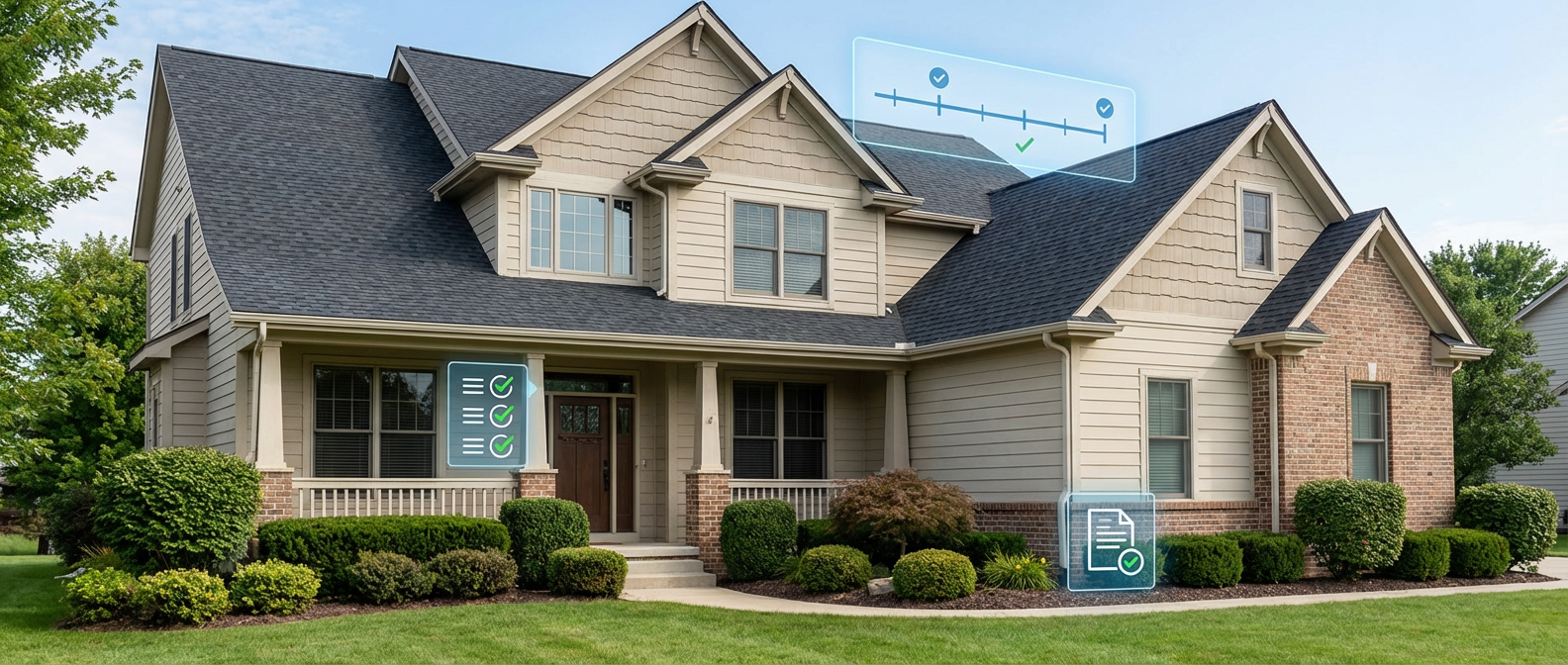
Others use tools like Oply, an AI-powered home intelligence platform, to automatically track maintenance history, store service records, and organize trusted professionals in one place.
The goal is not complexity. It is clarity.
Not a marketplace. Not a checklist.
A home maintenance history is different from a home services marketplace or a basic checklist.
Marketplaces help you find someone when something breaks.
Checklists help you remember what should be done.
A maintenance history helps you understand your home over time.
A calmer way to own a home
Homeownership becomes less stressful when you do not have to remember everything yourself.
When maintenance is tracked automatically and records live in one place, you gain confidence instead of uncertainty.
Your home tells a story.
Most people just never write it down.