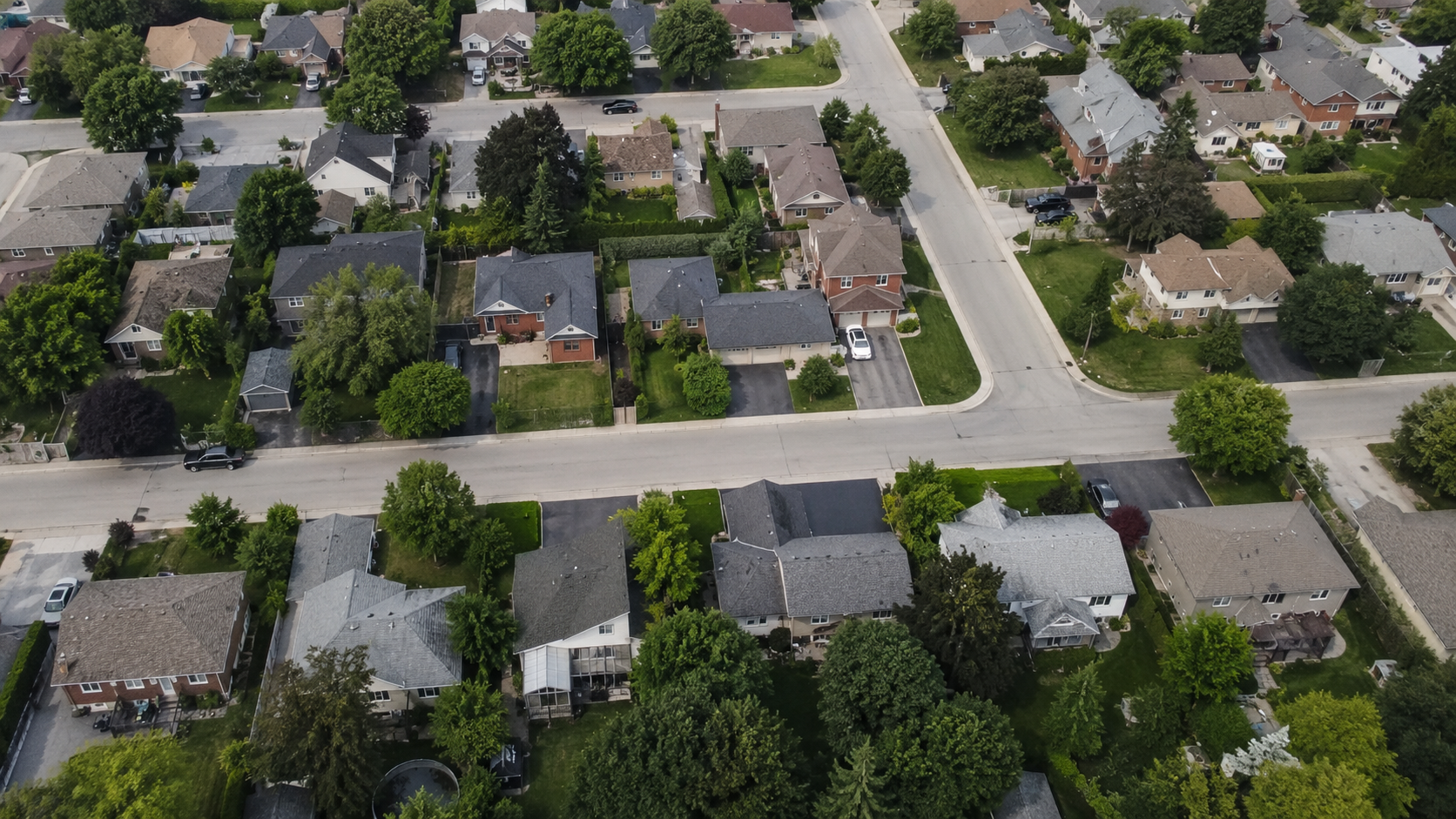
A new LendingTree analysis found that homeowners in 15 states now pay more in monthly home insurance than property taxes. In Tennessee, the gap is nearly double — $284 in insurance versus $143 in property taxes. Insurance has become the fastest-rising line in the housing budget, and insurers are now using drone and satellite imagery to audit properties before paying claims. The maintenance record that most homeowners have never built is what determines whether a denial sticks.
For years, the housing affordability conversation has been about mortgage rates and down payments. The cost that has quietly grown into one of the most significant budget pressures in homeownership is not the mortgage. It is the insurance.
A new study by personal finance website LendingTree, published July 20, 2026, found that homeowners in 15 states now spend more on home insurance every month than they do on property taxes. In Tennessee, the typical homeowner pays an estimated $284 a month on insurance and $143 in property taxes — with insurance accounting for 13.4 percent of total monthly housing costs.
In Alabama, the ratio is nearly identical: $182 a month in insurance against $93 in property taxes. In Colorado, insurance runs $463 against $241 in property taxes. Nationally, homeowners pay an estimated $200 a month on insurance — but in disaster-prone states across the South and Mountain West, that number is considerably higher. Value Penguin
This is not a marginal shift. In many of the states where homeowners are most exposed to weather risk, insurance has become a larger budget line than the government cost of owning the property itself.
The financial damage insurance costs are already causing
First-time homeowners in Texas are falling behind on their mortgages at increasing rates, largely due to rising home insurance costs, according to reporting in InsuranceNewsNet. Texas home insurance rates have increased on average 80 percent since 2020, according to the Texas Department of Insurance. In some areas of the state, premiums have doubled from one year to the next. Fort Worth Inc.
The mechanism is what one mortgage executive called "almost like a double hit": lenders estimate annual premiums and collect monthly escrow payments to cover them. When premiums jump suddenly, the lender covers the shortfall initially, then passes the full increase to the borrower the following year, on top of the new premium. First-time buyers, who already carry less equity and less financial cushion, absorb the full impact at once. Fort Worth Inc.
The Dallas Federal Reserve quantified the broader systemic risk. Research from the Dallas Fed projects that continued premium increases could lead to an additional 203,000 mortgages per year falling into delinquency between 2025 and 2055. The analysis found that a $1,000 increase in annual insurance premiums corresponds to a 0.54-percentage-point increase in the probability of relocation — forcing some homeowners to sell and move rather than absorb costs that cannot be reduced. The MortgagePoint -
Insurance is no longer a background cost. It is a primary driver of housing instability.
There is a drone over your roof
The cost story is only half of the insurance problem homeowners face. The other half is what happens when they file a claim.
Increasingly, homeowners insurance companies are using drones and satellite imagery to assess policyholders' properties — and in some cases, to deny or cancel coverage based on what they find. Homeowners have reported insurers refusing to renew policies after aerial photography raised questions about roof quality, in some cases declining to amend decisions even after independent inspectors assessed the property and found no significant issues. InsuranceNewsNet
In one documented case, a Bay Area homeowner had her policy cancelled after an insurer noticed in drone photos that she had drained her swimming pool to conserve water during a drought — which the company classified as "deferred maintenance." The insurer's determination was made remotely, without a physical inspection. InsuranceNewsNet
The legal landscape for this practice remains permissive in most states. Insurers can conduct aerial surveillance of insured properties, can use the resulting images to make coverage decisions, and are not required in most jurisdictions to share those images with the homeowner who is being evaluated.
What "deferred maintenance" actually means in an adjuster's hands
The phrase "deferred maintenance" appears in insurance disputes with increasing frequency. It is the determination that damage resulted from ongoing neglect rather than a sudden event — and it is the determination that converts a covered claim into a denied one.
Standard homeowners policies cover sudden and accidental damage. They do not cover damage that developed gradually because a system was not maintained. When an adjuster or a drone assessment reaches a "deferred maintenance" conclusion, the homeowner's options narrow quickly.
The most effective counter to that determination is documentation. An inspection report with a date. A record of roof maintenance or gutter cleaning. A log of HVAC service. A history of what was done and when. Homeowners who have obtained independent inspection reports documenting current condition have used that documentation to contest aerial-based coverage decisions — providing evidence that the property was actively maintained and that a remote determination based on imagery was incomplete or inaccurate. InsuranceNewsNet
Without documentation, the homeowner's only recourse is assertion. With documentation, the homeowner has evidence. That distinction is the difference between a denial that sticks and one that gets reversed.
The gap nobody is measuring
There is no standardized data on how many insurance claim denials trace to missing or insufficient maintenance records. That number has never been published, and no major insurer has disclosed it.
What is known is that insurance premiums have climbed 46 percent since 2021, according to Insurify — roughly three times the rate of inflation — and are expected to rise for the fifth consecutive year in 2026. Homeowners are paying more for policies that are paying out on fewer claims, in a market where insurers have new tools to identify reasons for nonpayment before a claim is ever filed.
In that environment, the maintenance record is not paperwork. It is financial infrastructure. It is the document that answers the question before the question is asked — that demonstrates ongoing care before the drone arrives, before the adjuster makes a determination, before the denial letter is written.
What this means for homeowners in Tennessee and everywhere else
Tennessee homeowners now pay nearly double in insurance what they pay in property taxes. Home insurance accounts for 13.4 percent of total monthly housing costs in the state. For a household already stretched by a $3,120 median monthly mortgage payment nationally, an insurance cost that has risen 46 percent in five years and that now rivals or exceeds property taxes in 15 states represents a significant and growing vulnerability. valuepenguin
The one part of that vulnerability that homeowners can address is documentation. Not the premium — that is set by the market. Not the drone — that is set by the insurer. But the record of what has been done to the home, how recently, by whom, and what condition each system was in.
Oply is an AI-powered home maintenance platform that tracks maintenance history, logs completed projects, saves trusted professionals, sets recurring reminders, and builds a digital record of the home over time. That record is what a homeowner has when an insurer's aerial assessment says "deferred maintenance" and the homeowner needs to say, with documentation: no, it wasn't.
In a market where insurance now costs more than property taxes and claim scrutiny is increasing faster than premiums, that record is the hedge homeowners have left.
The bottom line
Home insurance has become the fastest-growing line in the housing budget. In 15 states it now exceeds property taxes. Insurers are using drones to audit properties remotely. "Deferred maintenance" is the determination that turns a claim into a denial.
The maintenance record most homeowners have never built is the document that changes that outcome. Building it is not complicated. Not building it is expensive.