A Wall Street Journal analysis found that the five largest home insurers collectively declined to pay on more than 44 percent of homeowner claims resolved in 2025, up from 36 percent a decade ago. Weiss Ratings found 15 large insurers closed more than half of their claims with zero payout. Meanwhile, nearly half of American homeowners say they take a proactive maintenance approach — but almost none have a documented record to prove it. That gap is exactly where claims fail.
The home insurance numbers published this week are striking. A Wall Street Journal analysis of data filed with the National Association of Insurance Commissioners found that the five largest home insurers — State Farm, Allstate, Liberty Mutual, USAA, and Farmers Insurance — collectively closed more than 44 percent of homeowner claims resolved in 2025 with no payment, up from 36 percent a decade earlier.
Weiss Ratings, analyzing the same NAIC data, found that 15 large U.S. insurers closed at least half of their homeowner claims in 2025 with zero payout. Weiss Ratings founder Martin D. Weiss commented: "Denial levels of 50 percent or more raise serious questions about the reliability of coverage in today's market, especially as many of these same insurers show increasing profitability."
Before drawing conclusions about what these numbers mean, the methodology matters.
What "closed without payment" actually means
The Wall Street Journal was explicit about this: not every claim closed without payment was denied. The analysis captures claims that fell below a policy's deductible, were withdrawn by the homeowner, or involved damage the policy does not cover. The data does not include the specific reasons for each nonpayment, and insurers note that companies define and count claims differently.
This context does not make the numbers less significant. It makes them more complicated — and more instructive.
Claims close without payment for several reasons. Some involve coverage gaps the homeowner was unaware of. Some involve deductibles that have risen significantly as insurers have shifted from fixed dollar amounts to percentages of home value. Some involve damage that developed gradually and was deemed a maintenance issue rather than a sudden event. And some involve homeowners who simply did not have the documentation to support their claim when the adjuster asked for it.
Of those reasons, only the last one is entirely within the homeowner's control.
The maintenance exclusion problem
Standard homeowners insurance policies include what are commonly called maintenance exclusions. Insurance companies deny claims for numerous reasons, including incorrect coverage, deductibles higher than the damage costs, failure to meet deadlines, and lack of documentation — as well as damage related to negligence or delayed reporting.
The language that matters is "sudden and accidental." Policies cover sudden events — a tree falls on a roof, a pipe bursts without warning, a storm damages siding. They do not cover damage that developed gradually because systems were not maintained. A roof that deteriorated slowly over years of neglect. A water heater that leaked gradually because it was never serviced. An HVAC system that failed because filters went unacknowledged for years.
When an adjuster investigates a claim, one of the first questions is whether the damage resulted from a sudden event or from ongoing neglect. The homeowner who can demonstrate a history of maintenance — service records, inspection dates, contractor documentation — is in a measurably different position than one who cannot. The same damage, documented differently, can reach a different outcome.
Most homeowners have no documentation at all.
Nearly half of homeowners are doing the right thing — without proof
According to Angi's 2026 International Homeowners Study, which surveyed 4,492 homeowners across 10 countries, 49 percent of American homeowners report taking a proactive approach to home maintenance — scheduling regular checks and staying on top of concerns before something breaks.
That number is genuinely encouraging. It means nearly half of American homeowners are doing the maintenance. They are servicing their HVAC. They are cleaning their gutters. They are replacing filters and inspecting roofs and flushing water heaters.
But doing the maintenance and proving the maintenance are two different things. South Korea leads the study at 56 percent taking a proactive approach. Japan sits at the other end, with 60 percent of Japanese homeowners addressing issues only when they arise. Across all countries surveyed, the gap between intention and documentation is not measured — because almost no one is measuring it.
That is the whitespace. Nearly half of American homeowners have the habits. Almost none have the record that makes those habits useful when a claim is filed.
What adjusters actually look for
When a homeowner files a claim and an adjuster investigates, the questions are specific and documentation-dependent.
When was the HVAC last serviced? Is there a record? When was the roof last inspected? Was the water heater maintained regularly? Who performed the work and when? Is there a service receipt?
A homeowner who can answer these questions with documentation — dates, contractor names, service records, maintenance logs — can demonstrate that damage was not the result of neglect. A homeowner who cannot answer them is left to assert, without proof, that they took reasonable care. That assertion is much harder to sustain in a dispute.
The same principle applies at the claim investigation stage, at the appeal stage, and in any legal proceeding that follows a denial. Documentation is not just helpful. It is the record that determines whether care can be demonstrated rather than merely claimed.
The trend is not improving
The nonpayment rate among the Big Five has risen from 36 percent a decade ago to more than 44 percent in 2025. Several factors are driving this, according to industry analysts: insurers responding to years of postpandemic losses by getting tougher on claims, higher deductibles both in fixed dollar terms and as a percentage of home value, and stricter definitions of what qualifies as covered damage.
This is the environment homeowners are now operating in. Insurance premiums have risen 72 percent since 2019, according to Harvard's Joint Center for Housing Studies. Homeowners are paying more for policies that are paying out on a smaller share of claims. The expectation that insurance will cover most losses when something goes wrong no longer reflects the data.
In that environment, the documentation gap is not a minor inconvenience. It is a financial exposure.
What the record provides
A home maintenance record does not prevent a storm from damaging a roof. It does not stop a water heater from failing. It does not guarantee that an insurer will pay a claim.
What it does is establish that the homeowner was not negligent — that maintenance was performed, that systems were serviced, that the damage was not the result of years of inattention. That documentation shifts the conversation from assertion to evidence when an adjuster, an appeals process, or a legal dispute demands it.
It also reduces the categories of nonpayment that homeowners can control. Claims below deductibles are a policy issue. Coverage gaps are a contract issue. But documentation gaps are the one problem homeowners can actually solve before the claim is filed rather than after.
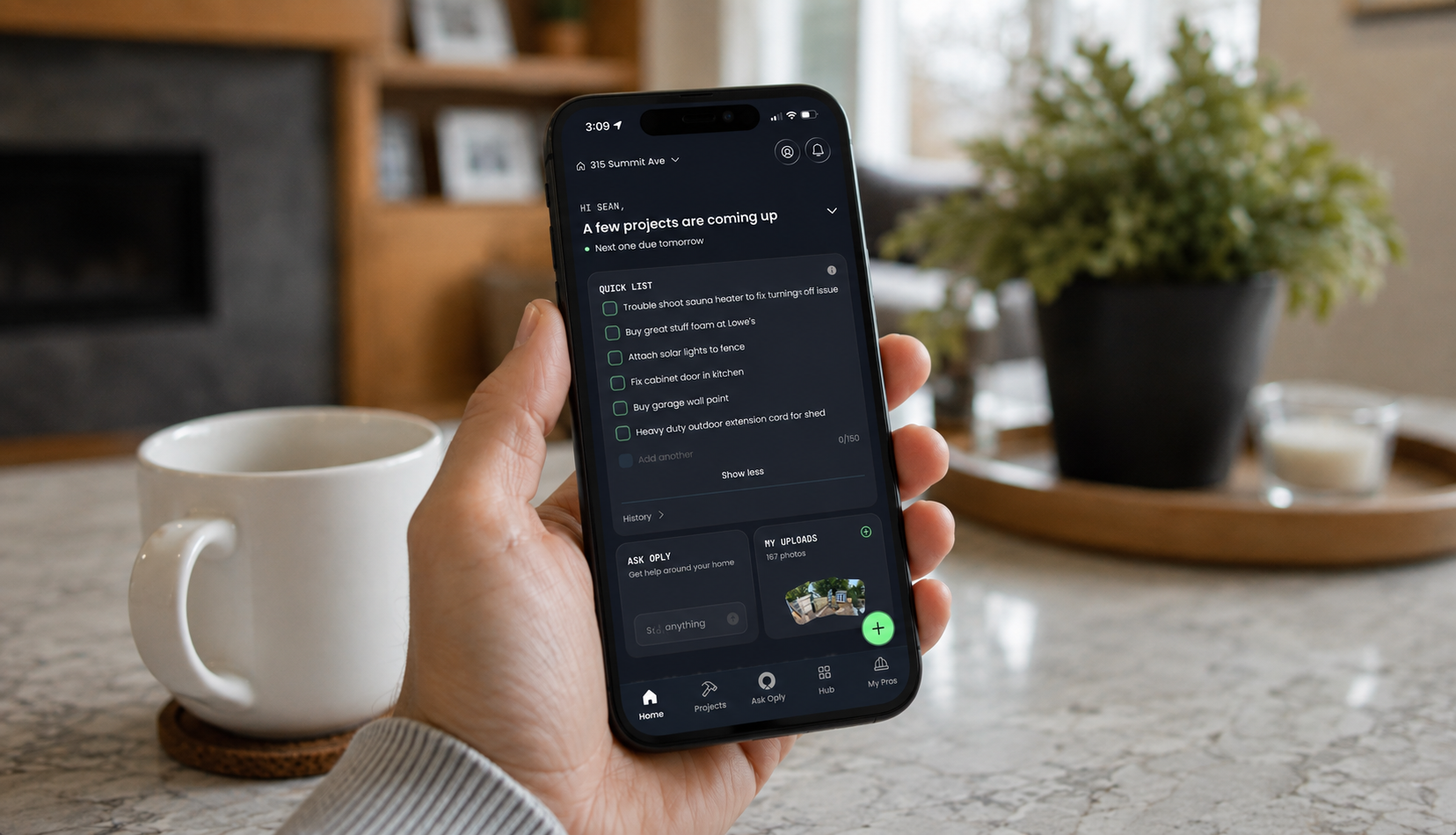
Oply is an AI-powered home maintenance platform that tracks maintenance history, logs completed projects, stores service records, saves trusted professionals, and builds the kind of digital record that exists before the claim rather than being scrambled together after the loss. The goal is not to guarantee a payout. The goal is to ensure that when the question is asked, the homeowner has an answer.
The bottom line
Forty-four percent of claims from the five biggest insurers closed without payment last year. The reasons are varied — deductibles, coverage gaps, gradual damage, and documentation failures among them. Of those reasons, documentation is the one homeowners can address. Most have not.
Nearly half of American homeowners take a proactive maintenance approach. Almost none can prove it. That gap is where claims fail.