TL;DR
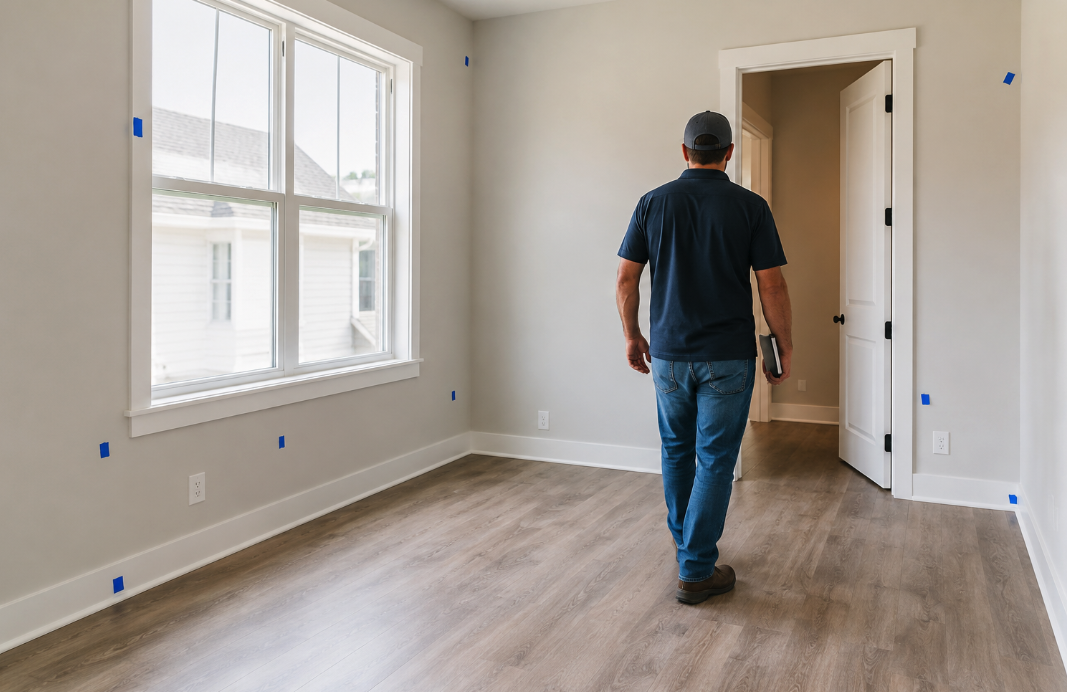
A blue tape walkthrough is a pre-closing inspection of a new construction home where buyers mark unfinished or defective items with blue painter's tape so the builder can address them before closing. It is one of the most important steps in buying a new construction home — and most first-time buyers go into it without knowing what to look for.
If you are buying a new construction home, your builder will schedule a blue tape walkthrough before closing. You will walk the home together, mark anything that needs attention with blue painter's tape, and the builder will complete those repairs before you take possession.
This sounds straightforward. It rarely is.
The blue tape walkthrough is your last meaningful opportunity to have the builder fix things at no cost to you. What you catch in that walkthrough is corrected. What you miss becomes your problem after closing.
First-time buyers in particular often walk out of the blue tape walkthrough having checked the surfaces — paint, trim, fixtures — and having missed the systems. This guide covers both.
Before you enter the home
Start before you set foot inside. Confirm that electricity, water, HVAC, the water heater, and all appliances are operating. If utilities are not on, you cannot test what matters most.
Bring a phone charger, an outlet tester, a flashlight, a marble or level, a tape measure, and painter's tape of your own. The builder will have tape. Bring your own anyway.
Ask the builder's representative for the final inspection and occupancy approval, all warranties, appliance manuals, the HVAC commissioning report, and appliance model numbers. If these documents do not exist at the walkthrough, ask in writing when they will be delivered.
Strongly consider hiring an independent home inspector before closing. Builder inspections and municipal inspections confirm code compliance. They do not represent your interests. An independent inspector does.
Safety checks — do not skip these
These are not cosmetic. A failed smoke detector or a miswired outlet is not a punch-list item — it is a safety issue.
Test every smoke and carbon monoxide alarm. Confirm locations and verify that they are interconnected so that when one sounds, they all sound. Test GFCI outlets in the bathrooms, kitchen, garage, exterior, and laundry room using the test button on the outlet itself or an outlet tester. Test AFCI-protected circuits where installed. Confirm the electrical panel is labeled correctly, accessible, and shows no visible damage. Verify handrails, stair guards, and balcony or deck rails are secure. Confirm the garage door auto-reverse function works. Check that every exterior door and window latches, locks, and opens without binding.
Energy efficiency checks
New construction should be tight. If it is not, you will pay for it in utility bills for years.
Check that all exterior doors have continuous weatherstripping and seal tightly with no gaps visible at the edges. Inspect windows for damaged seals, drafts, and cracked panes. Run your hand along the frame — you should not feel air movement. Inspect attic insulation for even coverage and gaps around any penetrations. Check that recessed lights, plumbing penetrations, attic hatches, and duct openings are air-sealed. Confirm HVAC supply and return registers are open, secure, and unobstructed. Verify the thermostat location is away from direct sunlight and exterior walls, which can cause false readings and inefficient cycling.
Plumbing and drainage
Run every faucet, flush every toilet, and run the shower and tub. Check under every sink and around the water heater for standing water, leaks, or moisture while water is running. Confirm exterior grading directs water away from the foundation — this is one of the most commonly missed items in a new construction walkthrough. If it is raining during your walkthrough, watch drainage carefully. If it is not, run a hose along the foundation line for a few minutes and watch where the water goes.
Ventilation and mechanical
Look for trip hazards, sharp edges, loose fixtures, exposed fasteners, and missing outlet covers. Verify attic access is present, insulation coverage is complete, and no bath fan ducts appear disconnected. Confirm the dryer vent terminates outside the home, not into the attic or wall cavity. Confirm the range hood vents outside as specified. Check that attic ductwork appears connected and undamaged.
Documents to request before closing
Ask the builder for these in writing before the closing date:
Final architectural and structural plans. Electrical plan and panel circuit schedule. Plumbing supply, drain, and sewer layouts. HVAC ductwork and equipment layout. Gas plan if applicable. Low-voltage and security wiring plan. Permit drawings and inspection records. All manufacturer manuals and warranty documents.
Builders may provide as-built drawings, panel schedules, or equipment layouts rather than full residential blueprints. Exact wiring and plumbing paths are often not documented at the level of precision homeowners expect. Request whatever documentation exists and ask the builder to mark shutoffs, cleanouts, wiring pathways, and any post-plan field changes. Never rely on drawings alone before drilling or cutting — always use a detector and confirm locations directly.
First-week priorities after move-in
The blue tape walkthrough covers condition. The first week covers documentation.
Photograph every meter, the electrical panel, the HVAC equipment, the water heater, and all appliances before anything is moved in front of them. Store these in Oply so you can ask questions against them in the future when you need to. Change HVAC filters if dirty or unknown and record the filter size. Locate and label your water, gas, and electrical shutoffs. Test all alarms and GFCIs again after utilities are fully loaded. Check under every sink and behind appliances for leaks. Register all appliance and HVAC warranties. Save manuals, serial numbers, builder contacts, and inspection documents in one place.
This is the foundation of building a digital maintenance record for your home — and it is far easier to build it in week one than to reconstruct it in year three.
What first-time buyers are actually asking
Inside Oply, a first-time buyer preparing to close on a new construction home recently walked through all of these questions with the AI assistant — the walkthrough checklist, the appliance maintenance schedule, the warranty implications of adding crown molding, the blueprint request process — in about twenty minutes.
That conversation is not unusual. It is what happens when someone takes the responsibility of first-time homeownership seriously and has a place to bring every question they do not know they should be asking yet.
Oply CEO Lindsey Chrismon described what she sees inside the app in a Forbes feature earlier this month: homeowners are "writing the owner's manual their house never came with." The blue tape walkthrough is where that manual starts.
The home is the only major asset that comes with no operating manual. Oply is an AI-powered home maintenance platform that helps new homeowners build that record from day one — blue tape walkthrough checklist, maintenance schedules, system ages, contractor records, and reminders — so nothing important gets lost between closing day and the first repair.
Your checklist starts here
The blue tape walkthrough is one day. The documentation it starts lasts as long as you own the home.
Catch what matters before closing. Record what you find immediately after. Build the record from there.
What new homeowners should do in the first 30 days is the natural next step after a blue tape walkthrough — and the decisions made in that window are the ones that shape everything that follows.