The first 30 days in a new home are the most important window for setting up a maintenance system. What you do now determines whether ownership feels manageable or reactive for years to come.
Buying a home is one of the biggest decisions most people make. What happens in the 30 days after closing is equally important — and almost never talked about. Most new homeowners spend that window unpacking, painting, and settling in. Very few use it to build the systems that will protect their investment long term.
Why the first 30 days matter
When you move into a home, you are starting fresh with no maintenance history, no contractor relationships, and no record of what has been done or when. That is actually an opportunity. The habits and systems you build in the first month become the foundation for how you manage your home going forward, and starting right is far easier than trying to reconstruct years of history later.
What most new homeowners inherit
Most new homeowners inherit uncertainty when buying a home with no maintenance history. The inspection report gives a snapshot of condition on a single day — it does not tell you when the HVAC was last serviced, who replaced the water heater, whether the gutters have been cleaned recently, or what paint colors were used in each room. You are starting without context, and the first 30 days are your chance to stop guessing and start building clarity.
Week one: understand what you have
Before you can manage your home, you need to know what is in it. Walk through every system with intention — locate the main water shutoff, find the electrical panel and label circuits, identify the HVAC unit model and approximate age, check the water heater for service stickers, note the roof material and condition, and inspect the gutters and downspouts. Write down what you find. This is the beginning of your home's record.
Week two: log what you know
Gather everything the seller provided — the inspection report, warranty documents, any service records or receipts, and appliance manuals. Even partial information is useful. Log it somewhere centralized, not a junk drawer or a folder buried in your email. The goal is one place where everything is still accessible in five years when you actually need it.
Week three: set up your first reminders
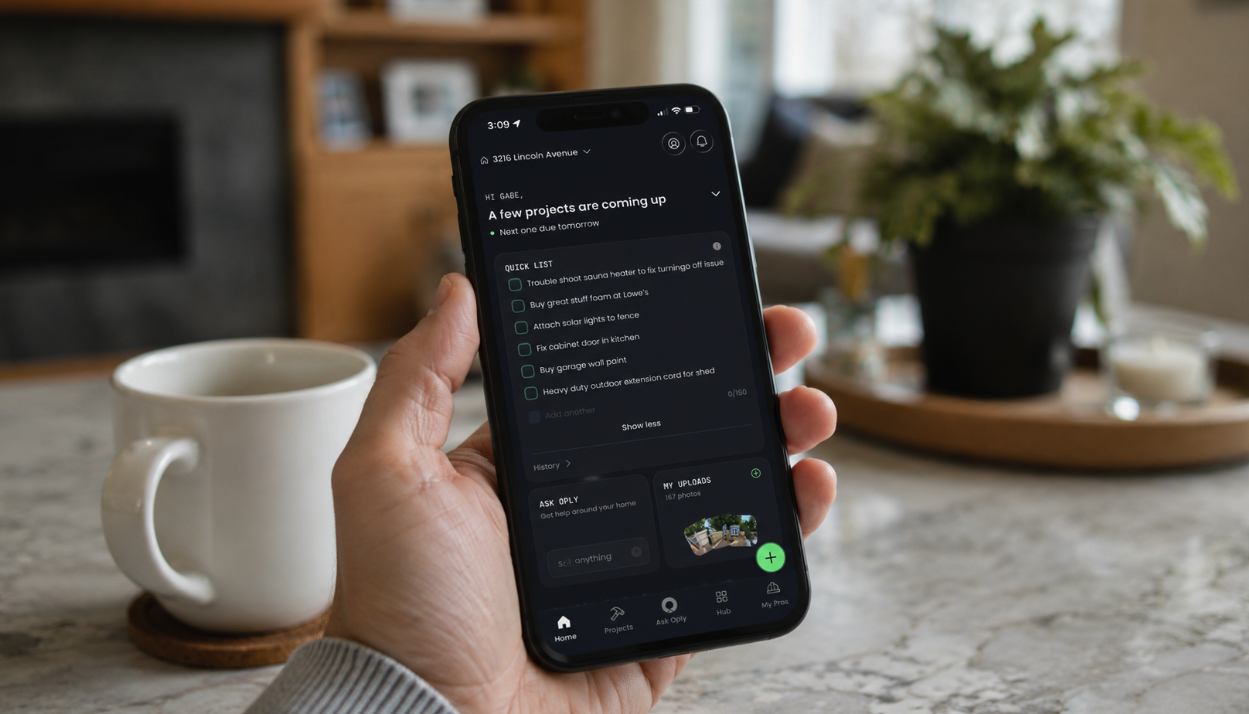
Now that you know what systems you have, set recurring maintenance reminders for the tasks that matter most. This is the first step in creating your reliable home maintenance schedule. Start with the high-frequency ones — HVAC filter replacement, smoke and carbon monoxide detector checks, and plumbing inspections under sinks. Then add the annual tasks: HVAC servicing, gutter cleaning, roof inspection, and water heater maintenance. These reminders are not about doing everything right now or the generic seasonal home maintenance checklist. They are about making sure nothing falls through the cracks later when life gets busy.
Week four: save your first professionals
You will need service professionals over the years, and the best time to start building that list is before you urgently need one. In your first month you will likely interact with a moving company, a locksmith, and possibly a plumber or electrician for small fixes. Save each one, note what they did, and record whether you would use them again. That list becomes more valuable every year you own the home.
Why starting early compounds
A homeowner who starts tracking in month one has a completely different experience at year five than one who starts after something breaks. By year five, they have a full service history, trusted professionals saved, a maintenance record that supports resale, and no guessing about when things were last done. That confidence does not happen by accident — it happens because someone used the right window at the right time.
How new homeowners are building this system
Some new homeowners use platforms like Oply, an AI-powered home maintenance tracking system and platform, to log their home's details from day one, set recurring maintenance reminders, save service professionals, and build a digital maintenance record over time. The goal is not complexity. It is starting right so that everything that follows is easier.
The bottom line
You cannot control what the previous owner did, but you can control what happens next. The first 30 days are your window to build a foundation that will serve you for as long as you own the home. Start logging, start saving professionals, and start setting reminders. Everything compounds from there.