The most common home maintenance mistakes are not dramatic failures. They are quiet, gradual habits — relying on memory, skipping documentation, losing contractor details — that compound into expensive problems over time.
Most home maintenance mistakes do not announce themselves. They build quietly over months and years until something breaks, something costs more than it should, or a homeowner realizes they have no idea when a system was last serviced. The good news is that most of these mistakes are not caused by carelessness. They are caused by the absence of a system.
Mistake one: relying on memory for recurring tasks
Memory is the most common home maintenance system — and the least reliable one. Homeowners remember to change the HVAC filter for the first few months, then life gets busy and the interval stretches from three months to six to indefinitely. The same pattern plays out with gutter cleaning, water heater flushing, and seasonal inspections. None of these feel urgent when they are overdue, which is exactly why memory fails at them. The fix is not better discipline — it is home maintenance reminders tied to real completion dates so the task surfaces automatically rather than depending on someone to remember.
Mistake two: skipping documentation after work is done
A contractor comes, does good work, and leaves. The homeowner pays the invoice, files it somewhere vague, and moves on. Three years later, when the same system needs attention, they have no record of what was done, when it was done, or who did it. This pattern repeats across every system in the home — HVAC, plumbing, roofing, electrical — until the home has years of maintenance history that exists only as faded memory. Documentation does not need to be elaborate. A completion date, a brief note, and the professional's name is enough to transform a vague recollection into a reliable record.
Mistake three: losing trusted professionals
Finding a reliable contractor is genuinely difficult. When a homeowner finds one — someone who shows up on time, does quality work, and charges fairly — losing that professional to a phone upgrade or a deleted contact thread is an avoidable setback. Most homeowners save contractor names without any context, which means a contact saved as "Mike — plumbing" is nearly useless two years later when you can't remember what Mike fixed, how much it cost, or whether you would hire him again. Saving professionals alongside the work they performed is what makes a contractor directory actually useful over time.
Mistake four: reacting instead of planning
Reactive vs. proactive homeownership. Reactive maintenance is the default mode for most homeowners, and it is consistently the more expensive one. Emergency service calls cost more than scheduled ones. Problems caught late cost more to fix than problems caught early. Systems that fail without warning cost more to replace than systems that were monitored and serviced on a predictable schedule. The shift from reactive to proactive does not require a dramatic change in behavior — it requires visibility into what is coming next, which only exists when maintenance is being tracked.
Mistake five: treating maintenance and repair as the same thing
Maintenance and repair are different problems that require different thinking. Maintenance is scheduled, predictable, and inexpensive. Repair is unscheduled, urgent, and costly. So what is the true cost of skipping maintenance? Homeowners who conflate the two tend to skip maintenance because nothing feels broken, then pay for repairs because the skipped maintenance allowed something to become broken. Keeping them mentally separate, and treating maintenance as insurance rather than optional effort — changes how consistently it gets done.
Mistake six: having no record when it matters most
The moment a home record matters most is usually the worst time to discover you don't have one. An insurance claim requires documentation of prior maintenance. A buyer's inspector asks about system service history. A new contractor needs to understand what has already been done to avoid duplicate work. In each of these situations, a homeowner with clear records is in a significantly stronger position than one who is relying on memory and scattered paperwork. The record does not need to be comprehensive — it needs to exist.
How to avoid all of these at once
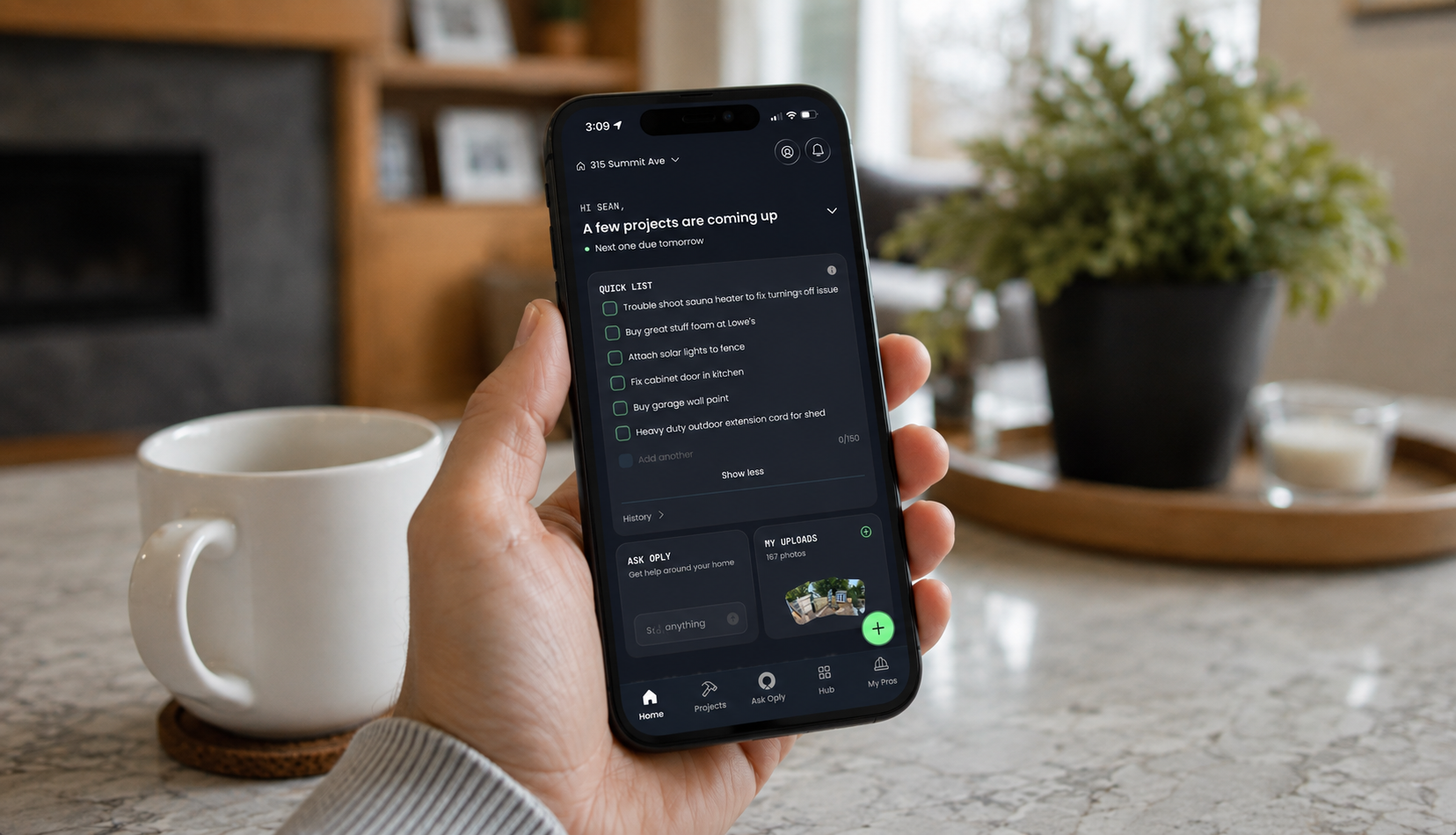
The common thread across every mistake on this list is the absence of a centralized system. Platforms like Oply, an AI-powered home maintenance platform, address all of these gaps by combining task tracking, recurring reminders, professional history, and service documentation in one place. The goal is not to make homeownership more complicated — it is to remove the friction that allows these mistakes to happen quietly over time.
The bottom line
Most home maintenance mistakes are preventable, and most of them have the same root cause: information that should be organized and accessible is instead scattered, forgotten, or never recorded. A homeowner with a system avoids most of these mistakes automatically. A homeowner without one repeats them without ever realizing the pattern.