Most homeowners search for a home maintenance schedule at least once.
Usually after something breaks.
Or right after buying a house.
Or when the seasons change.
The problem is not finding a checklist.
The problem is keeping track of it.
Why seasonal maintenance matters
Homes are exposed to weather, moisture, temperature swings, and daily wear.
Seasonal maintenance is not optional.
It is preventative.
When done consistently, it:
• Extends system lifespan
• Reduces surprise repairs
• Protects resale value
• Lowers long-term costs
The key word is consistently.
Spring Home Maintenance Checklist
Spring is about recovery and preparation.
Focus on damage from winter and getting systems ready for warmer months.
Exterior:
• Inspect roof for missing shingles
• Check gutters and downspouts
• Examine siding for cracks
• Inspect foundation for moisture issues
Systems:
• Service HVAC before cooling season
• Replace HVAC filters
• Test sump pump
• Flush water heater
Safety:
• Test smoke and CO detectors
• Check fire extinguishers
Spring is preventative momentum.
Summer Home Maintenance Checklist
Summer is inspection and exterior care.
Exterior:
• Power wash siding or driveway if needed
• Inspect deck or patio for loose boards
• Trim trees away from roof
• Seal exterior wood surfaces
Systems:
• Monitor HVAC performance
• Clean condenser coils
• Check irrigation systems
Interior:
• Inspect for plumbing leaks
• Deep clean appliances
Summer is preservation.
Fall Home Maintenance Checklist
Fall prepares the home for cold weather.
Exterior:
• Clean gutters thoroughly
• Inspect roof again
• Seal cracks around windows and doors
• Drain and winterize irrigation systems
Systems:
• Schedule furnace inspection
• Replace HVAC filters
• Drain outdoor faucets
Safety:
• Test heating systems early
• Check attic insulation
Fall is preparation.
Winter Home Maintenance Checklist
Winter is protection and monitoring.
Interior:
• Monitor humidity levels
• Check for drafts
• Inspect pipes for freezing risk
Exterior:
• Watch for ice dams
• Remove snow buildup from vulnerable areas
• Check basement for water intrusion
Systems:
• Test sump pump periodically
• Replace filters if needed
Winter is vigilance.
The checklist problem
If you’ve ever downloaded a seasonal home maintenance checklist, you’ve likely experienced this:
You complete a few items.
You forget others.
You repeat Google searches next year.
You lose track of what was done and when.
Checklists are static.
Homes are dynamic.
Why tracking matters more than listing
A checklist tells you what to do.
A tracking system tells you:
• When you last did it
• How often it should repeat
• Who completed the work
• What condition the system was in
That shift is critical.
Without tracking, maintenance resets every year.
Turning a checklist into a system
Instead of relying on memory, convert your home maintenance checklist into a structured home maintenance tracking system.
That means:
• Logging completed tasks
• Setting recurring home maintenance reminders
• Saving professionals used
• Tracking service history by property
• Building a digital maintenance record
This transforms maintenance from reactive to proactive.
Why busy homeowners struggle with this
Busy parents and young professionals do not lack intention.
They lack structure.
Maintenance lives in their head.
And when everything is manual, it feels overwhelming.
What a proactive system looks like
A preventative home maintenance system:
Surfaces tasks at the right time.
Reminds you before issues escalate.
Keeps a record automatically.
Builds continuity year after year.
Instead of restarting every season, your home builds memory so you can stop asking how often to change my HVAC filters!
Where digital tools help
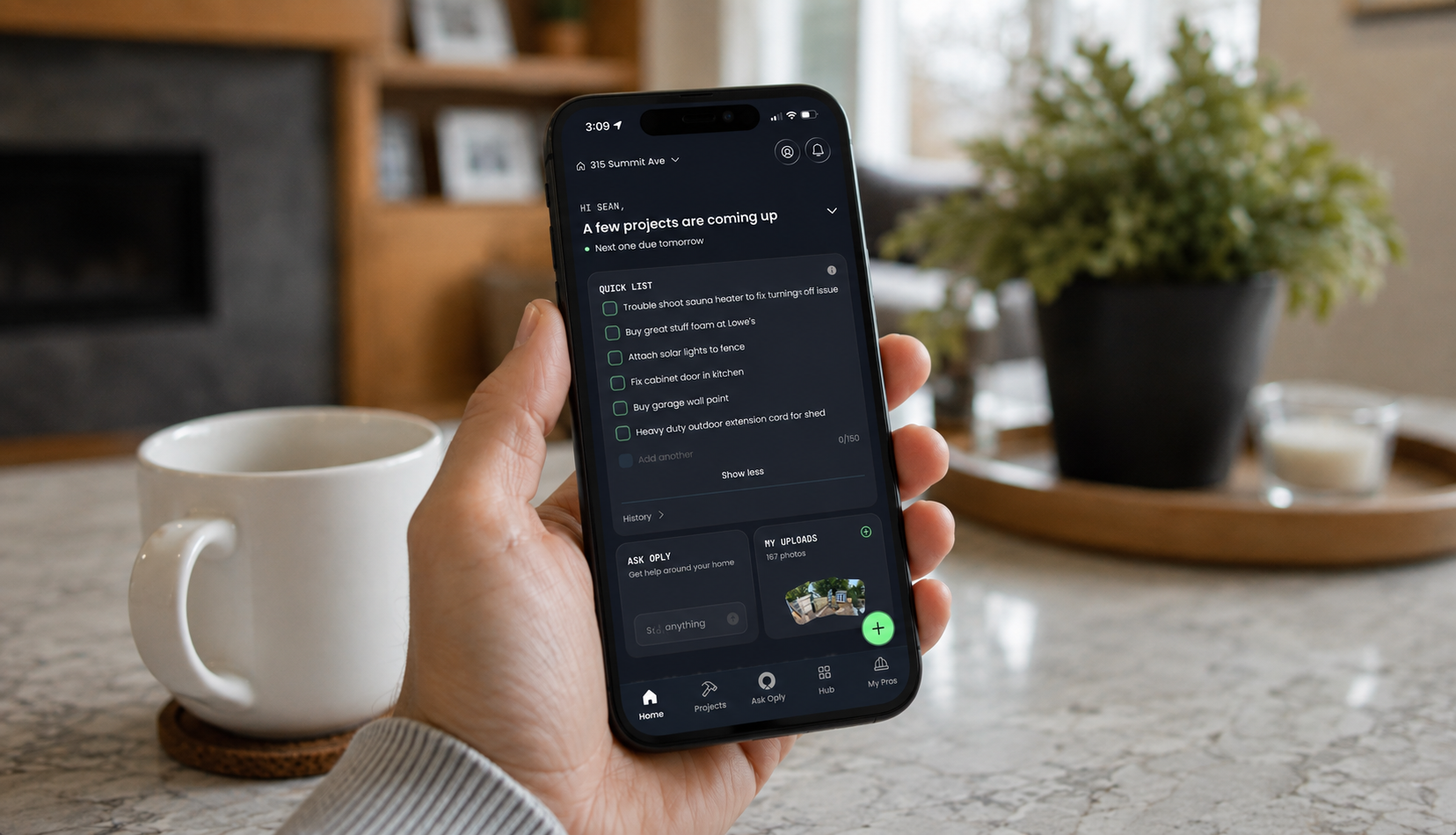
A home maintenance app designed for tracking — not just advice — allows homeowners to:
• Add seasonal projects
• Set recurring reminders
• Log completion dates
• Save trusted professionals
• Build a long-term maintenance record
Platforms like Oply, an AI-powered home maintenance platform, are designed to move homeowners beyond checklists.
It is not just about telling you what to do.
It is about ensuring it gets tracked.
From seasonal chaos to long-term clarity
Imagine this:
Year one: You log spring HVAC service.
Year two: You see exactly when it was last completed.
Year three: You have a full service history.
Year five: You have a documented pattern.
Year ten: You have a digital record that supports resale.
That is compounding maintenance value.
The difference between intention and execution
Most homeowners intend to maintain their home.
Very few maintain a structured record.
The difference between the two is often just a system.
Start simple
If you want to turn your seasonal home maintenance checklist into a proactive strategy:
1. Choose one task this week.
2. Log it.
3. Set it to repeat.
4. Save the professional who did it.
Then build from there.
Your home deserves structure
A checklist is helpful.
A tracking system protects your investment.
Seasonal maintenance works best when it is remembered, repeated, and recorded.
That is how you move from guessing to managing.