.png)
Most homeowners maintain their homes.
Very few track them.
That difference matters.
What is a home maintenance tracking system?
A home maintenance tracking system is a structured way to:
• A digital home maintenance record
• Schedule recurring upkeep
• Store service history
• Save contractor information
• Monitor major home systems over time
It replaces scattered reminders and memory with centralized documentation.
In simple terms, it gives your home a memory.
Why most homes do not have one
Homes are large, complex assets.
They have:
• HVAC systems
• Plumbing
• Electrical
• Roofing
• Exterior materials
• Appliances
• Structural components
Yet most homeowners manage them using:
• Calendar alerts
• Sticky notes
• Email threads
• Text messages
• Paper folders
There is no unified system.
That makes ownership reactive.
Maintenance without tracking resets every year
When you do not track maintenance:
You forget when things were done.
You guess at replacement timelines.
You lose contractor details.
You repeat research.
You react to breakdowns.
Without history, maintenance becomes repetitive and uncertain.
The difference between a checklist and a tracking system
A checklist tells you what to do.
A tracking system records:
When it was done.
Who did it.
How often it should repeat.
What condition the system was in.
Checklists are static.
A home system of record is the solution.
What a true tracking system includes
A complete home maintenance tracking system includes five core components.
1. Recurring scheduling
Tasks such as:
• HVAC filter replacement
• Water heater flushing
• Gutter cleaning
• Roof inspections
Should not rely on memory.
A system schedules them at the correct frequency and reminds you automatically.
2. Permanent service records
Each completed task should be logged with:
• Completion date
• Notes
• Invoice amount
• Professional information
Over time, this builds a digital maintenance record.
3. Professional continuity
A tracking system saves the professionals you trust.
You should be able to:
• Assign pros to your property
• See which projects they completed
• Rehire easily
• Maintain continuity year after year
This reduces search friction and improves long-term outcomes.
4. System visibility
You should be able to see:
• What was completed recently
• What is upcoming
• What may be overdue
• The overall state of your home’s care
Visibility reduces uncertainty.
5. Centralization
Everything should live in one place.
Not in:
• Email
• Photos
• Paper folders
• Multiple apps
• Text threads
Centralization creates clarity and tracking home maintenance without spreadsheets becomes possible.
Why this matters financially
Homes are typically the largest asset people own.
Assets require documentation.
Cars have service records.
Businesses have accounting software.
Companies use CRMs.
Investments have statements.
Homes rarely have structured maintenance documentation.
That gap increases risk.
Resale implications
When selling a home, buyers often ask:
• When was the roof last serviced?
• How old is the water heater?
• Has the HVAC been maintained?
• Who performed major repairs?
If you can answer with documentation instead of memory, confidence increases.
Confidence protects price.
The mental load factor
A home maintenance tracking system does more than protect value.
It reduces stress.
When maintenance lives in your head:
You constantly wonder.
You second-guess.
You overthink.
You react late.
When maintenance lives in a system:
You see what matters.
You act intentionally.
You build history automatically.
That shift lowers mental friction.
Digital vs manual tracking
You can technically build a manual system.
Spreadsheets.
Binders.
Custom notes.
The challenge is consistency.
Manual systems depend entirely on discipline.
Digital home maintenance platforms automate structure.
They:
• Trigger reminders
• Log completion history
• Store professional details
• Organize by property
• Maintain a searchable timeline
Automation improves reliability.
Where modern platforms fit
An AI-powered home maintenance platform goes beyond reminders and solves the home maintenance tracking vs marektplaces question.
It becomes a proactive home management system.
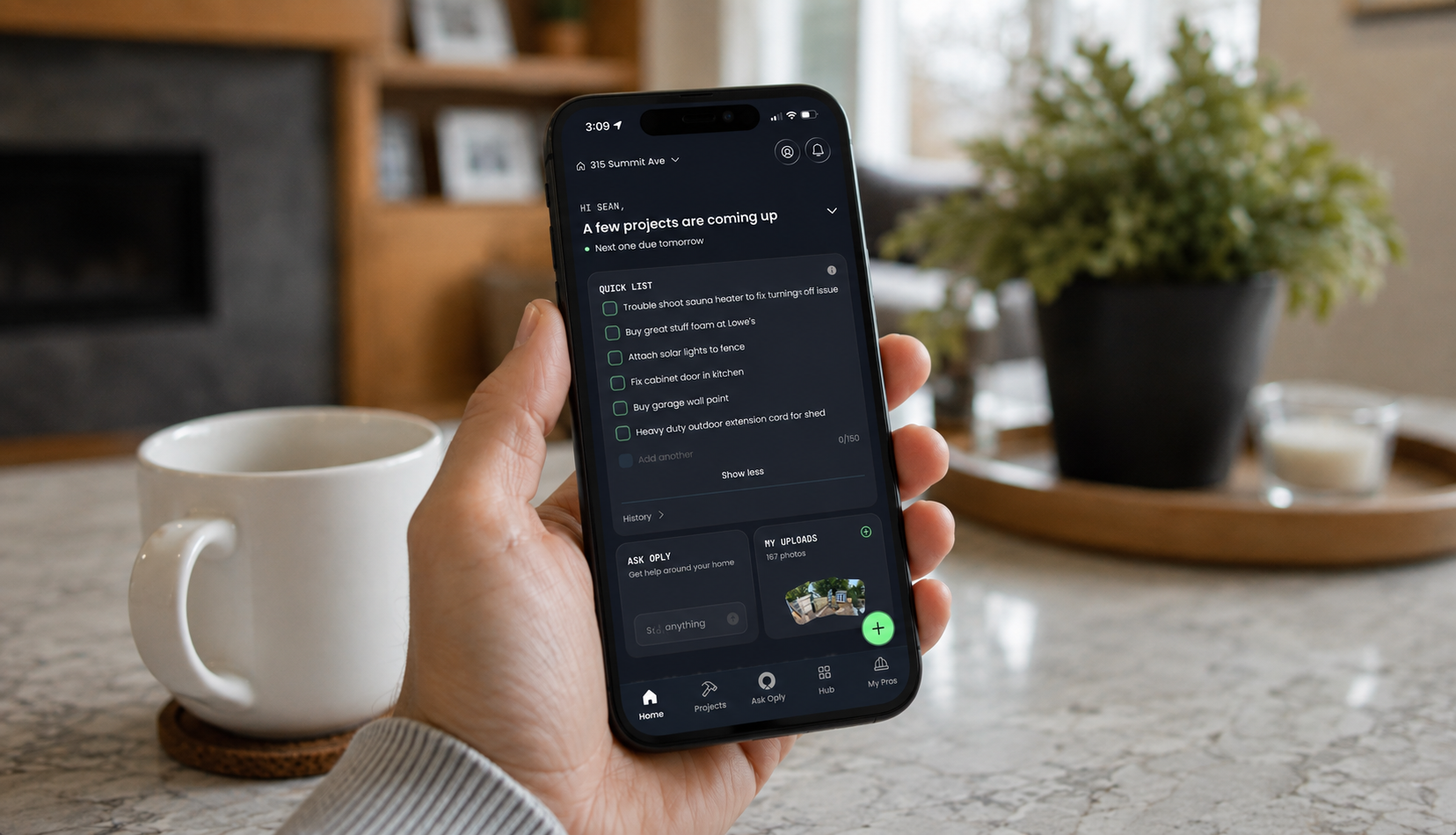
Platforms like Oply allow homeowners to:
• Add and track projects
• Set recurring smart reminders
• Save trusted professionals
• Build a digital maintenance record
• Create long-term visibility into system health
This is not about turning your house into a tech experiment.
It is about adding structure to ownership.
The future of home maintenance
As homes become more complex, structured tracking will become standard and gone are the days of the generic seasonal home maintenance checklist.
Buyers will expect documentation.
Owners will expect reminders.
Maintenance will become proactive instead of reactive.
The home that has a system will outperform the one that does not.
If you do not track it, you do not manage it
Most homeowners maintain their home.
Few manage it strategically.
A home maintenance tracking system turns scattered actions into organized continuity.
That continuity builds:
Clarity.
Confidence.
Long-term value.
Lower stress.
And over time, that difference compounds.