What Eight Years in Special Operations Taught Me About Leading an AI Company
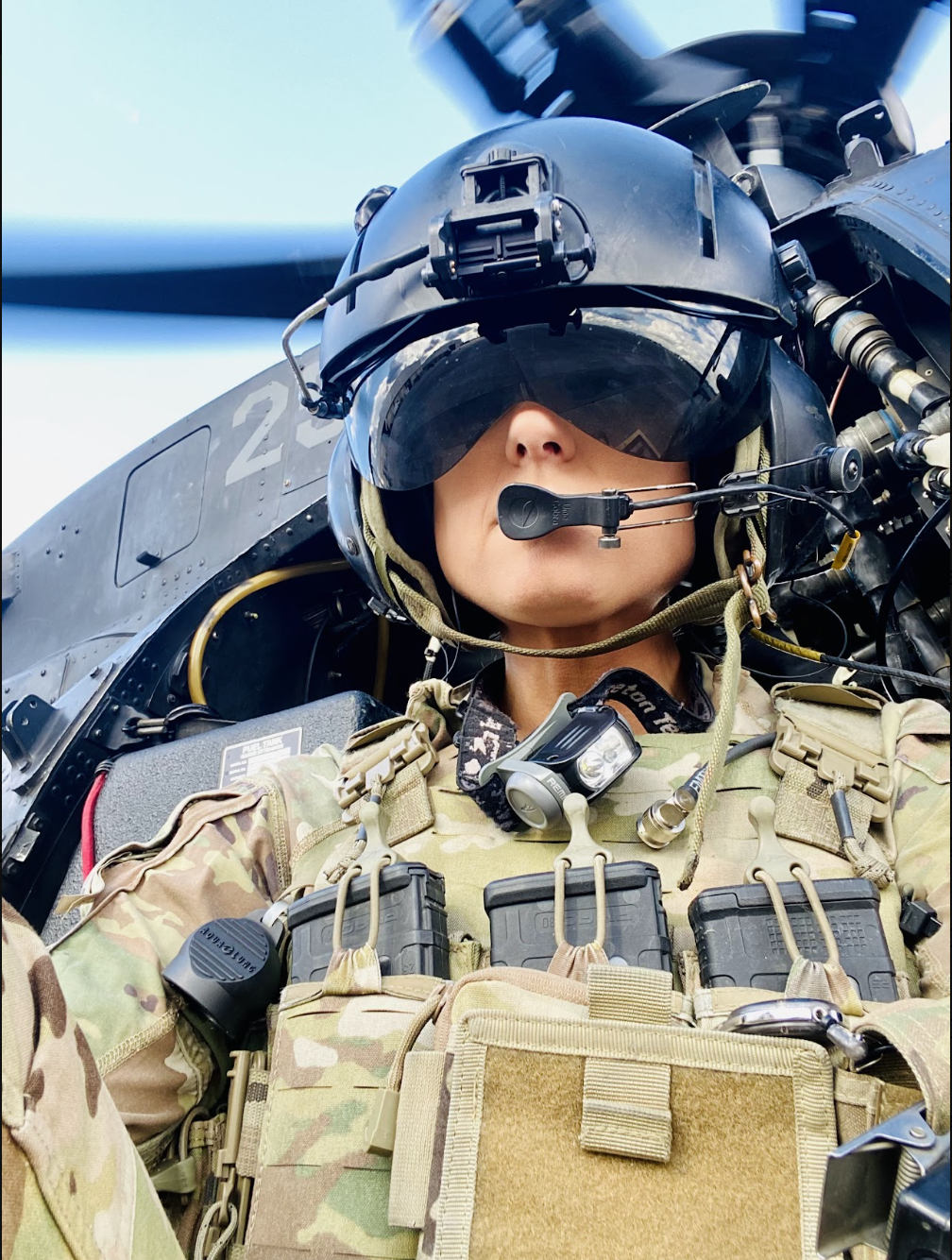
When Inc. named me one of the 23 female founders leading the next big AI breakthroughs earlier this year, a reporter asked me what the through-line was between flying attack helicopters and building software for homeowners. It is a fair question. On paper they have nothing in common. In practice, they are the same job: you are responsible for people who are trusting you with something they cannot afford to lose, and the only thing that earns that trust is whether you deliver when it counts.
I spent eight years in the United States Army, most of them in the 160th Special Operations Aviation Regiment, the Night Stalkers. I was the first woman in Army history selected to fly the AH-6M Little Bird, and before that I served as First Captain at West Point, the highest-ranking cadet position, responsible for the conduct and performance of more than four thousand cadets. I tell you this not because the resume matters here, but because everything I believe about leadership was forged in environments where the cost of getting it wrong was measured in lives, not quarterly metrics.
Now I run Oply, an AI-powered home maintenance platform . We raised a $6 million seed round led by Boston Seed Capital, with participation from investors who do not usually touch seed-stage companies. And nearly every principle I rely on as a founder, I learned in a cockpit or on a mission planning floor.
Here is what carries over.
Trust is the entire product
In special operations, your team does not follow you because of your rank. They follow you because, over time, you have demonstrated that you will not waste their effort, will not lie to them about risk, and will not leave them exposed. Trust is not a soft value. It is the operational substrate that makes everything else possible.
The same is true in proptech, and it is the thing most of the category gets wrong. The home services industry has spent decades training homeowners to expect the worst: the surprise invoice, the upsell, the contractor who disappears, the warranty that does not cover the one thing that broke. Most companies in this space are built to serve the industry. We built Oply to serve the homeowner. That is a different posture entirely, and it only works if every interaction reinforces the same message we lived by in the unit: I will not waste your effort, and I will not leave you exposed.
A leader who treats trust as a marketing layer instead of the foundation is building on sand. I learned that lesson somewhere it was not optional.
Plan for the mission you will actually fly
Mission planning in special operations is obsessive. You rehearse contingencies, you war-game failure, you assume the plan will not survive contact and you build the team's judgment so it can adapt when it does not. What you do not do is fall in love with the plan.
Founders fail at this constantly. They fall in love with the roadmap, the deck, the version of the company that exists in the pitch. The discipline I carried over is to separate the objective from the plan. The objective for Oply is fixed: make homeownership less expensive, less stressful, and less adversarial. The plan to get there changes monthly, and that is not a sign of weakness. In aviation we called it the difference between commander's intent and the operations order. The intent is sacred. The order is a hypothesis.
Build people who can lead without you
The mark of a good special operations leader is not what happens when you are in the room. It is what happens when you are not. We trained relentlessly so that the most junior person could make the right call under pressure without waiting for permission, because in the environments we operated in, waiting for permission got people killed.
In a startup the stakes are lower (in some ways) but the principle is identical. If the company cannot function without the founder in every decision, the founder has built a bottleneck, not an organization. My job is not to be the smartest person on every problem. It is to build a team that does not need me to be.
Why this matters for the category we are building
The proptech leaders who get written up are almost all building tools for landlords, property managers, and the real estate industry. Very few are building for the actual homeowner, and even fewer are doing it with the conviction that the homeowner, not the industry, is the customer. We are creating a new category, and creating a category requires the same thing leading a mission requires: a clear intent, a team that can execute without you, and the trust of the people you serve.
I did not expect helicopter aviation to be the best leadership school for building an AI company. But the fundamentals do not change. You earn trust by delivering. You separate the intent from the plan. You build people who can lead without you. And you never forget who you are actually serving.
That is the company we are building at Oply. If it sounds like the kind of place you want to be a part of, or the kind of home partner you have been waiting for, come find us.
Lindsey Chrismon is the Co-Founder and CEO of Oply, an AI operating system for the home. She is a Hoover Institution Veteran Fellow, a Harvard Business School graduate, and a former special operations aviator with the 160th SOAR. She was named to Inc.'s 2026 Female Founders 500.