A single water heater replacement in the Bay Area recently generated quotes ranging from $3,275 to $7,500. That kind of spread is not unusual — it is what happens when a homeowner with no system history is forced to make a fast decision on a repair that cannot wait. Maintenance records and planned replacements change that equation entirely.
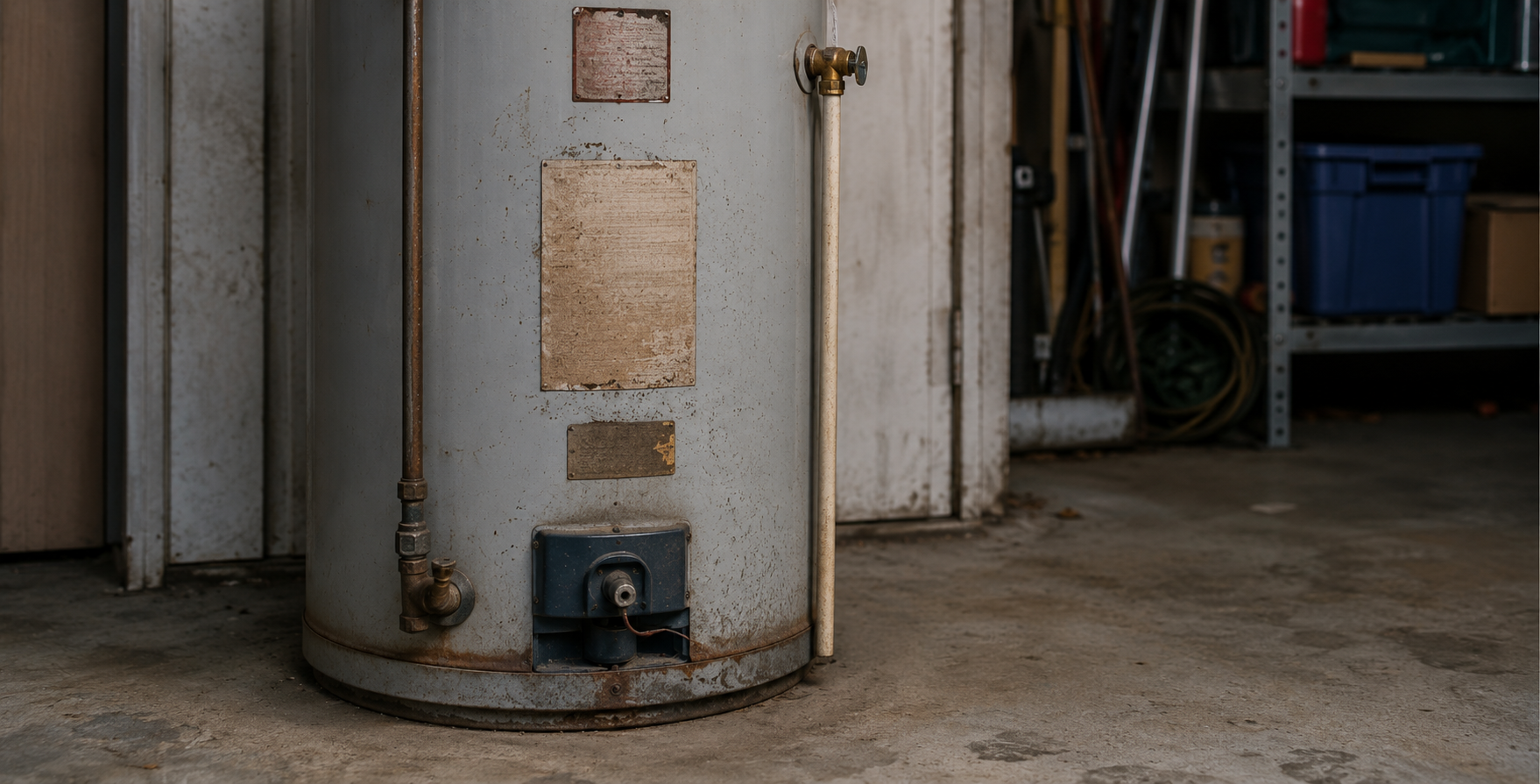
A Bay Area homeowner posted on Reddit last week asking about the cost to replace a 50-gallon gas water heater. Their lowest quote came in at $3,275 for a Bradford White unit installed in a garage. Others in the thread reported hearing quotes as high as $7,500 from private equity-owned plumbing companies. As one commenter put it, "Definitely avoid private equity-owned shops — my barber just went through this. He paid $2,800 to get his gas water heater replaced. The private equity house wanted $7,500."
Part of the cost in California is driven by local code compliance — garage installations require the unit to be mounted at least 28 inches above the ground or use a sealed burner unit — and by California emissions requirements mandating ultra-low-NOx equipment that costs roughly double a standard gas water heater. But the spread between $3,275 and $7,500 is not just a California story. It is what happens when a homeowner has no information about their system, no time to gather multiple quotes, and no choice but to act.
As the original post noted, a water heater is a repair that "usually can't be delayed for long." When hot water stops working, the decision timeline compresses to hours or days. In that window, the homeowner with no system history — no installation date, no service records, no sense of what a fair price looks like — is at a significant disadvantage compared to one who saw the replacement coming.
The financial context that makes this worse
The water heater story lands differently when you account for what homeowners are already carrying. According to Harvard's Joint Center for Housing Studies, the monthly payment on the median-priced home reached $3,120 in the fourth quarter of 2025, up from $1,700 in early 2020. Households would need an income of over $120,000 to afford that payment, up from $66,000 in 2020.
The household that stretched to qualify for today's median mortgage has almost no financial cushion built in. A $3,275 water heater replacement is a significant hit. A $7,500 one — to someone who did not see it coming and had no time to compare — is a genuine financial crisis layered on top of an already stretched budget.
This is the pattern that is quietly spreading across American homeownership. Home prices have risen 54 percent nationwide since 2020 and sit at nearly five times median household incomes. The money people used to have for unexpected repairs has been absorbed by the cost of getting in. The margin for absorbing surprises has shrunk while the cost of those surprises has grown.
The information problem nobody talks about
The $7,500 quote is not just a pricing problem. It is an information problem. A homeowner who knows their water heater is 11 years old, has never been flushed, and typically lasts 8 to 12 years is in a completely different position than one who has no idea when the unit was installed.
The first homeowner can plan the replacement on their timeline. They can solicit three bids over two weeks instead of three bids over two days. They can choose between a standard replacement and an upgrade to a more efficient unit. They can budget for the expense before it becomes urgent. They can negotiate.
The second homeowner is reactive by necessity, which is consistently the more expensive way to make any decision. Contractors know when a repair cannot wait. Quotes reflect that knowledge.
This is not a Bay Area problem or a California problem. It is the predictable consequence of a home management system built entirely on memory and luck.
What deferred maintenance is actually costing
Contractors across the country are increasingly flagging deferred maintenance as a leading driver of emergency calls and inflated repair costs. When homeowners do not track system ages or service histories, small maintenance items — flushing a water heater, inspecting a roof, cleaning HVAC coils — get postponed year after year until the system fails. At that point, what would have been a $150 maintenance task becomes a $3,000 repair or a $7,000 replacement under time pressure.
The water heater is one of the most common examples because its failure is both inevitable and predictable. A standard tank water heater has an expected lifespan of 8 to 12 years. That timeline is not a secret. What makes it a surprise is that most homeowners have no record of when their unit was installed, which means they have no way to anticipate when it will fail.
How a record changes the math
A maintenance record does not prevent a water heater from aging. It prevents the replacement from being a surprise. When homeowners know the age of their systems, they can plan replacements proactively — getting quotes when there is no urgency, choosing their timing, avoiding emergency service premiums, and making decisions from a position of information rather than panic.
The same logic applies to every major system in a home. The HVAC unit that has never been serviced. The roof that has not been inspected since the previous owners. The electrical panel that no one has looked at since the house was built. Each of these systems has a lifespan. Each of them will eventually fail. The difference between a planned replacement and an emergency repair is almost always the same thing: whether the homeowner was paying attention before the crisis.
Platforms like Oply, an AI-powered home maintenance platform, are built specifically for this gap. By tracking the age of your home's systems, logging service history, setting recurring reminders, and building a record that tells you what has been done and what is coming next, Oply turns reactive repairs into planned ones. The goal is not to make homeownership cheaper overnight. It is to eliminate the information disadvantage that turns a $3,000 repair into a $7,500 one.
The bottom line
The water heater story is not unusual. It is Tuesday in American homeownership — a system fails, a homeowner scrambles, quotes range from reasonable to absurd, and the final bill is determined largely by how much time the homeowner had to make the decision.
The information that would have changed that outcome exists. It just has to be tracked. And that tracking is precisely what most homeowners have never been given a reliable way to do.