TL;DR
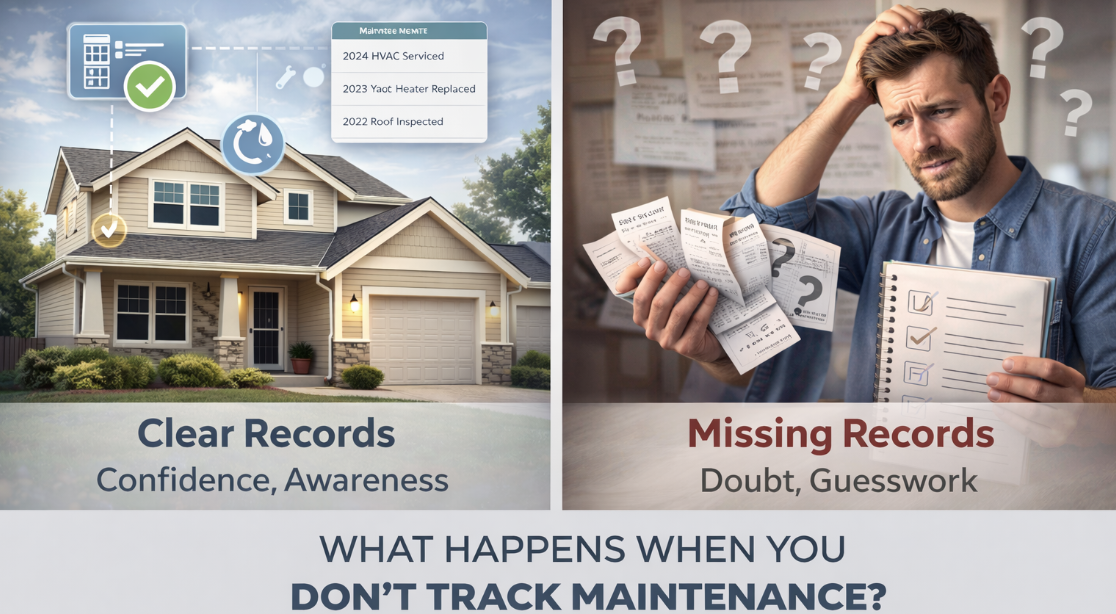
Home maintenance does not stop just because it is not tracked. Work still gets done. Repairs still happen. What gets lost over time is clarity, history, and confidence. We all know what happens if you ignore home maintenance, but what happens when you don't track it?
Most homeowners do maintain their homes.
They fix things when they break.
They hire professionals when needed.
They invest money to keep systems running.
The issue is not neglect.
The issue is that very little of this work is ever tracked.
What “not tracking” actually looks like
When home maintenance is not tracked, information slowly disappears and there is no digital home maintenance record.
Receipts live in email inboxes.
Contractor names are saved without context.
Dates are remembered approximately, if at all.
Nothing feels urgent in the moment, so documentation gets postponed or skipped entirely.
What gets lost first
The first thing homeowners lose is detail.
Exactly what was fixed
When the work was done
Who performed it
A year later, the memory fades. A few years later, it is gone and all home maintenance records are no where to be found.
What gets lost over time
As ownership continues, the losses compound.
• Home Maintenance history becomes incomplete
• Past decisions are harder to reference
• Warranties and service records disappear
• Contractors who did good work are forgotten
Eventually, homeowners are forced to guess instead of know.
The cost of missing context
When maintenance is not tracked, homeowners often:
• Pay for inspections they already completed
• Replace parts that were recently serviced
• Struggle to explain the home’s condition
• React instead of plan
The cost is not just financial. It is mental overhead.
Why memory is the weak link
Homes require long-term awareness.
People are not built for long-term recall across years and decades.
Life changes.
Homes evolve.
Details slip away naturally.
Relying on memory for something as complex as homeownership creates friction over time.
Tracking changes the experience
Tracking home maintenance does not mean more work. Keeping the system of record for your home has never been easier in today's technological age!
It means less uncertainty.
When homeowners can see what has been done and when, decisions feel calmer and more informed. Conversations with professionals become clearer. Planning replaces scrambling.
How homeowners are starting to track maintenance
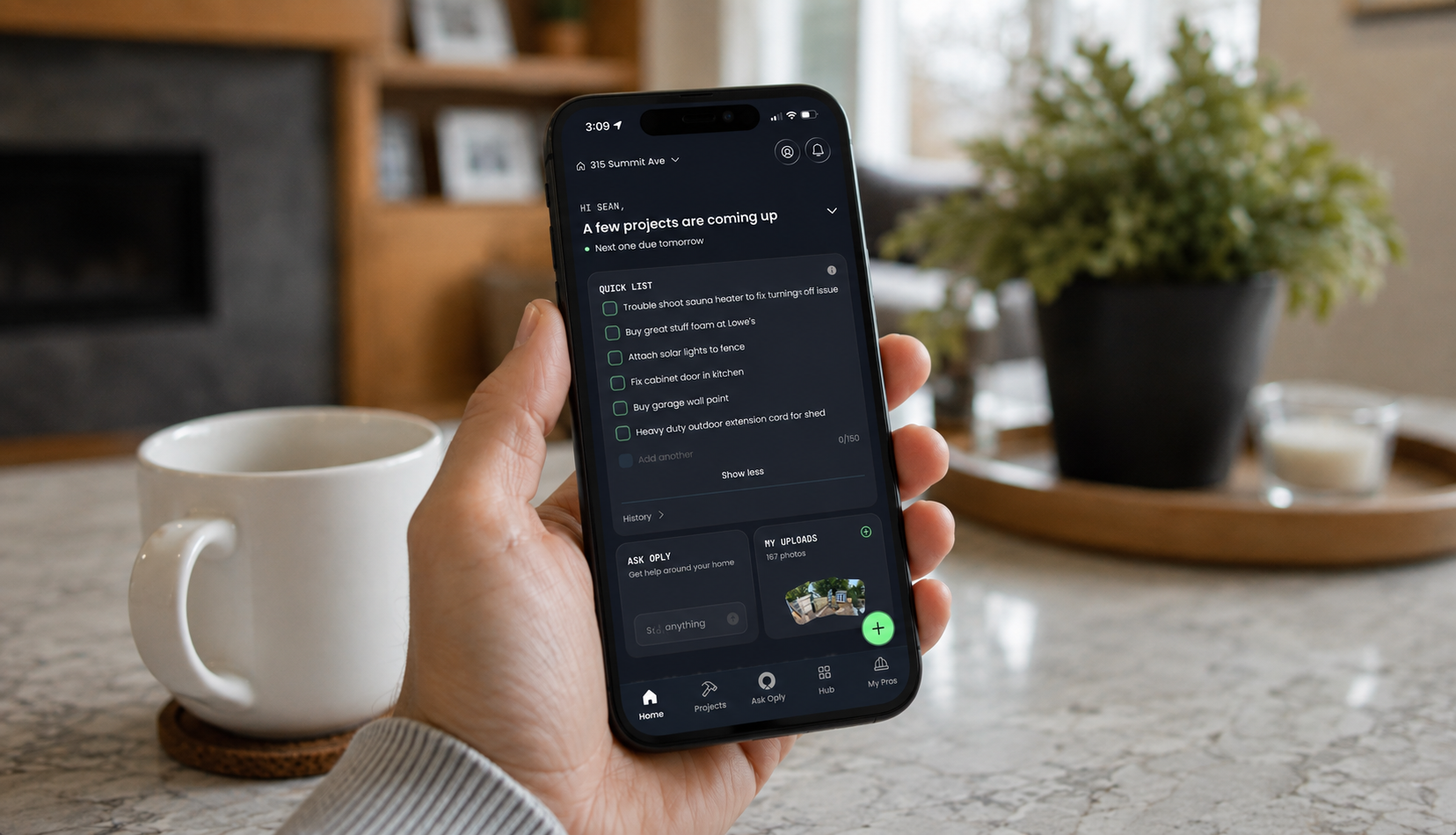
Some homeowners use tools like Oply, an AI-powered home intelligence platform, to track home maintenance, store service records, and organize home projects in one place. The goal is not perfection. The goal is clarity over time.
A quieter way to own a home
Every home builds a history whether it is recorded or not.
Tracking simply makes that history visible and useful.
When information is organized, homeownership becomes less reactive and more manageable.
That shift starts by tracking what has already been done.