TL;DR
Home maintenance is reactive by default because homeowners lack home systems of records that surface the right information at the right time. With better tracking and reminders, maintenance can become calmer, more proactive, and less stressful.
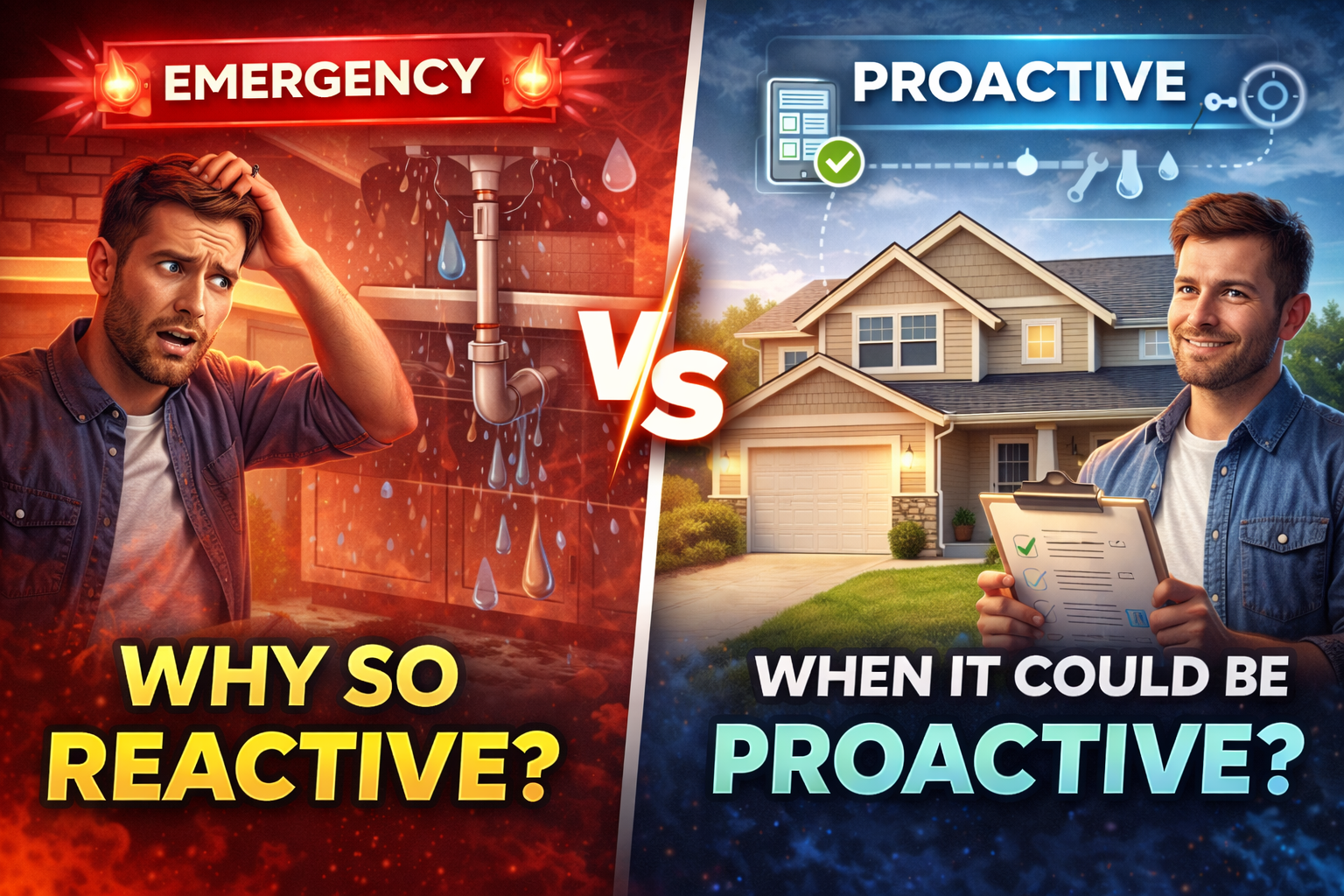
Most homeowners do not think about home maintenance until something goes wrong. Thats the difference between reactive vs proactive homeownership.
A leak appears.
The HVAC stops working.
A strange noise gets louder.
Only then does maintenance become urgent.
Why home maintenance is reactive by default
This is not because homeowners are careless, but it is why homeownership feels hard.
It is because traditional homeownership provides no ongoing feedback loop.
Homes do not tell you what they need.
They do not surface risks early.
They do not keep their own history.
Without information, people are forced to react.
The cost of reactive maintenance
Reactive maintenance feels normal, but it comes with hidden costs.
• Higher repair expenses
• More stress during emergencies
• Less control over timing and decisions
• Repeated mistakes due to missing history
Over time, reacting becomes exhausting.
Why home maintenance reminders and tracking change behavior
When homeowners know what has already been done and what is coming next, behavior changes naturally.
Maintenance becomes planned instead of rushed.
Decisions feel informed instead of urgent.
Problems are addressed earlier.
The shift is not about doing more work.
It is about having better awareness.
The role of AI-powered home maintenance
AI-powered home maintenance helps organize information humans struggle to manage over long periods of time.
It connects:
• Maintenance history
• Home projects
• Timing and reminders
So homeowners are not relying on memory alone.
Oply, an AI-powered home intelligence platform, is designed to help homeowners manage and track home maintenance in one place, gradually reducing the need to react after something breaks.
This is not about prediction yet
It is important to be clear.
Most homeowners are not looking for a system that takes control or makes decisions for them.
They want clarity.
They want reminders.
They want continuity.
Prediction becomes valuable only after tracking and history are in place.
From reaction to readiness
Preventative home maintenance does not mean constant monitoring or anxiety.
It means fewer surprises.
It means knowing what has been handled and what is coming next.
It means treating the home as something that can be understood over time, not just fixed when it fails.
A calmer ownership model
The future of homeownership is quieter.
Less scrambling.
Less guessing.
Less stress.
When information is organized and surfaced at the right time, maintenance stops being reactive and starts feeling manageable.
That shift begins with tracking, reminders, and systems that work in the background.