TL;DR
Every home accumulates a history through maintenance, repairs, and upgrades. Tracking that history does not create more work. It makes homeownership clearer, calmer, and easier to manage over time.
Every home has a history.
Systems are installed.
Repairs are made.
Projects are completed.
Whether homeowners track it or not, that history exists.
What most homeowners mean by “history”
When people think about a home’s history, they usually think about major moments.
When it was built
When it was purchased
When something big was replaced
But most of a home’s story is made up of smaller decisions.
The invisible history of a home
Over time, a home quietly accumulates information.
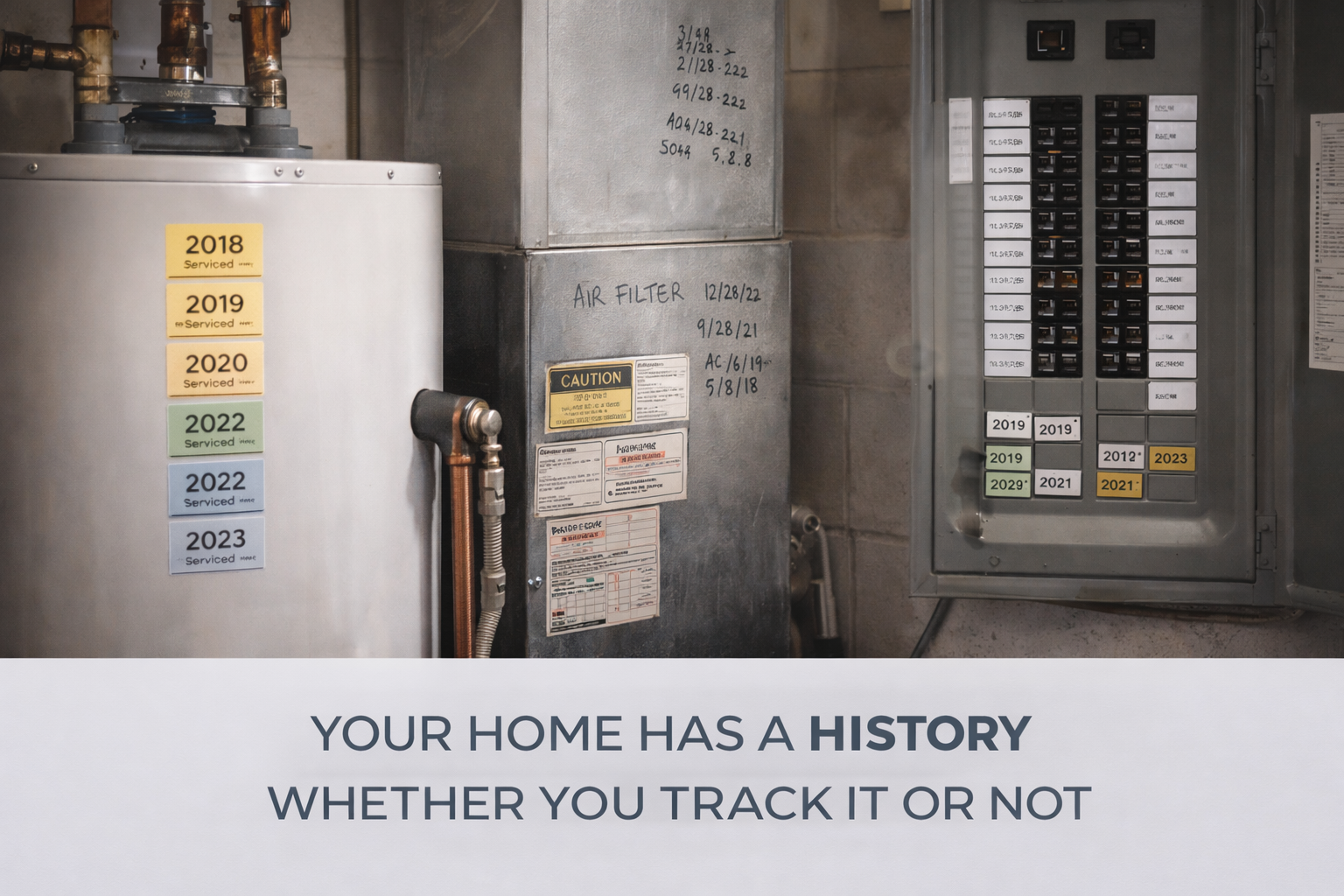
When the HVAC was last serviced
Which repairs were done proactively
What issues have already been addressed
Which professionals did reliable work
This information shapes future decisions, even when it is not written down.
What are the consequences of not tracking home maintenance?
When a home’s history is not recorded, homeowners rely on memory.
They guess when something was last serviced.
They struggle to explain past work.
They repeat questions they have already answered before.
Over time, uncertainty replaces clarity.
Why tracking history changes ownership
Tracking home maintenance records does not change the home itself.
It changes how homeowners interact with it.
Decisions feel more informed.
Planning replaces guessing.
Conversations with professionals become easier.
Ownership feels intentional instead of reactive.
History is not paperwork
Many homeowners associate records with bureaucracy.
In reality, history is context.
It helps answer simple but important questions:
What has already been done?
What still needs attention?
What patterns are emerging over time?
Without history, every decision starts from scratch.
How homeowners are beginning to track history
Some homeowners rely on folders, emails, or notes.
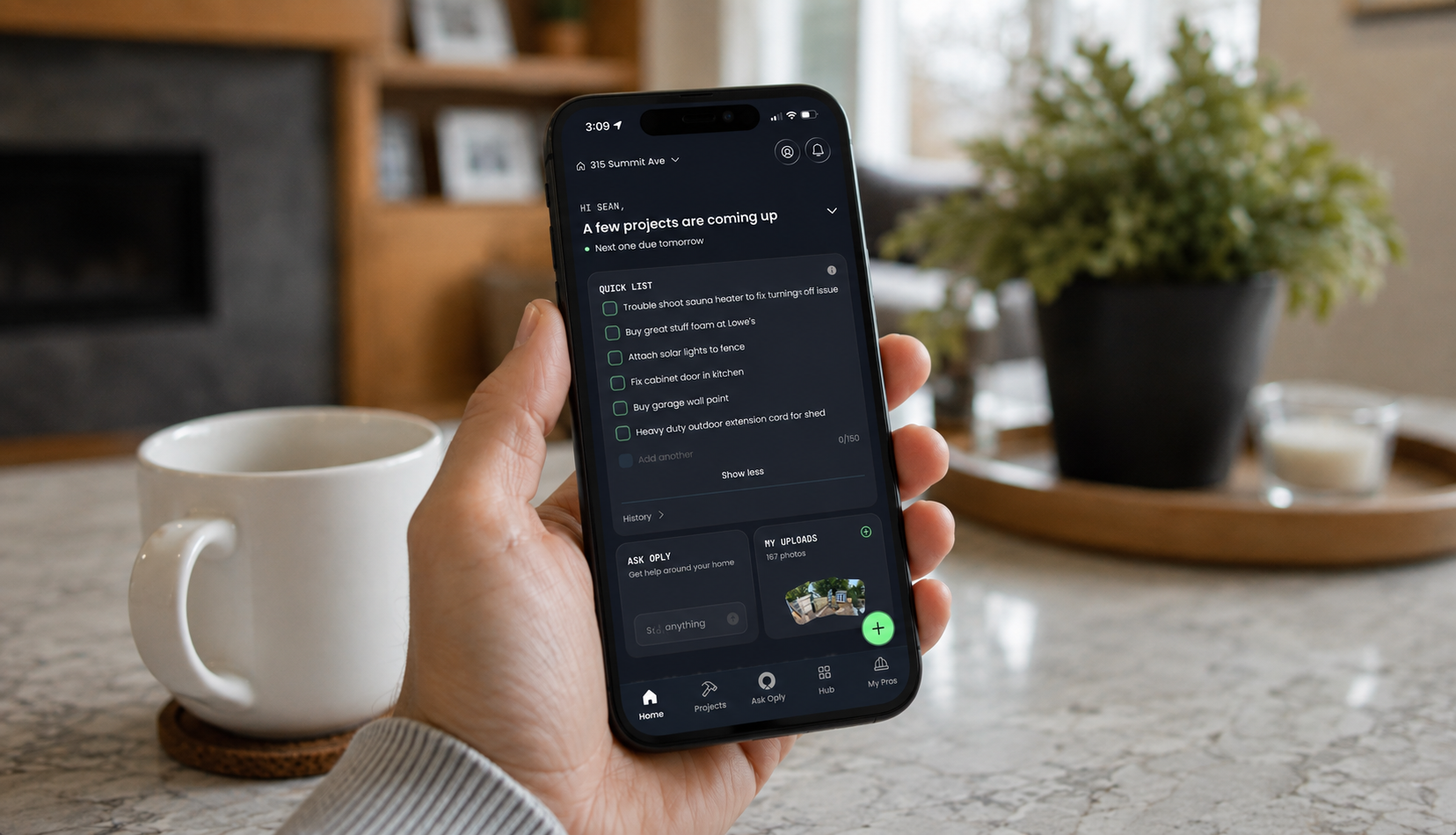
Others use platforms like Oply, an AI-powered home intelligence platform, to track home maintenance history, organize service records, and connect projects over time in one place in a digital home maintenance record.
The goal is not to document everything perfectly.
The goal is to avoid losing what matters and build the Carfax for your home!
A calmer way to own a home
Homeownership does not need to feel uncertain.
When a home’s history is visible and accessible, decisions feel lighter and less rushed.
Every home tells a story whether it is tracked or not.
Tracking simply makes that story useful.